
Your Team Role-Plays Every Week. Why Aren't Close Rates Moving?
Role-play works for insurance sales teams, but only when it includes specific, immediate feedback. Here's what the research says about turning practice into real performance gains.
3 min read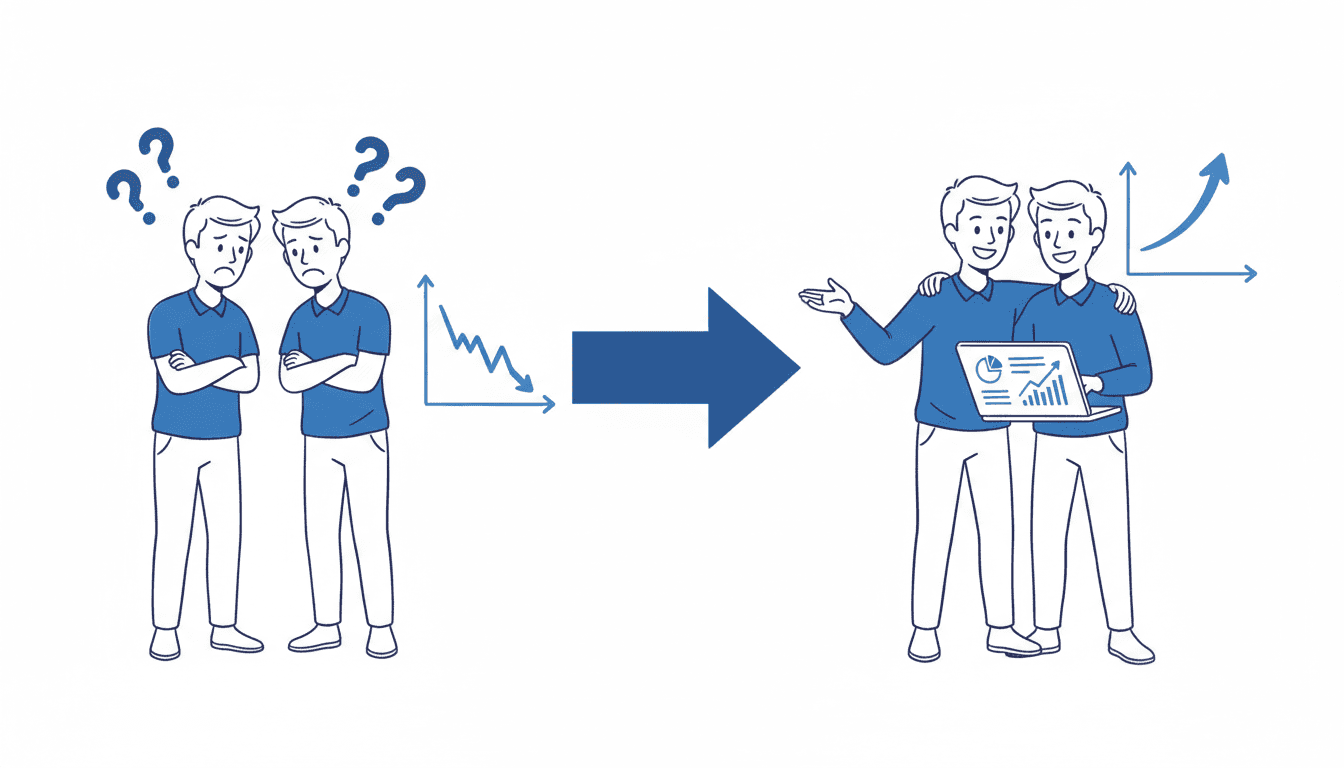
You already know role-play works. You have seen it yourself. When your agents practice handling objections before real calls, they close more deals. The agencies that role-play regularly outperform the ones that do not.
So the instinct makes sense: if you could just get your team to do more role-plays, you would see close rates climb.
But here is the problem. The way most agencies run role-play barely scratches the surface.
Practice Without Feedback Builds False Confidence
Think about your Tuesday morning role-play. Agents pair up, "practice objections" for 20 minutes, give each other a quick "good job," and move on. That feels productive. It is not.
Nobody is telling your agent that they quoted price at 2:15 in the conversation before establishing value. Nobody is pointing out that the prospect mentioned their kids, and your agent missed the chance to connect that to a coverage gap. Without that level of specific, immediate feedback, agents walk away feeling like they practiced without actually changing anything.
That is not practice. That is a warm-up disguised as training.
What the Research Says About Real Skill Building
Researchers have spent decades studying what separates world-class performers from average ones. The answer is not talent or years of experience. It is something called deliberate practice: structured repetition with immediate, specific feedback.
One landmark study in Psychological Review (Ericsson, 1993) found this pattern across dozens of fields. A violinist who practices the same difficult passage 50 times with a teacher correcting technique will outperform one who plays full concerts alone for years. The repetitions alone are not enough. The feedback is what drives improvement.
A later review of 609 training studies in JAMA (Cook, 2011) confirmed the same principle in professional settings. Simulation-based practice with feedback roughly doubled performance compared to unstructured experience alone.
The takeaway for your agency is straightforward. The role-play itself is not the variable that matters. The feedback is.
The Real Difference
There is a gap between "we role-played this morning" and "my agents improved 10 points on close rate this quarter." That gap is not more practice. It is better feedback.
Specifically, it is feedback that tells an agent exactly what they said, when they said it, why it did not work, and what to say instead. Not "try to build more rapport." Instead: "You jumped to quoting at the two-minute mark. Next time, ask about their current coverage and what worries them before you mention a number."
That kind of feedback, delivered immediately after every practice rep, is what turns role-play from a feel-good ritual into a skill-building system.